The Pictures
The paintings themselves. Five entries, each on a single object, material or document.
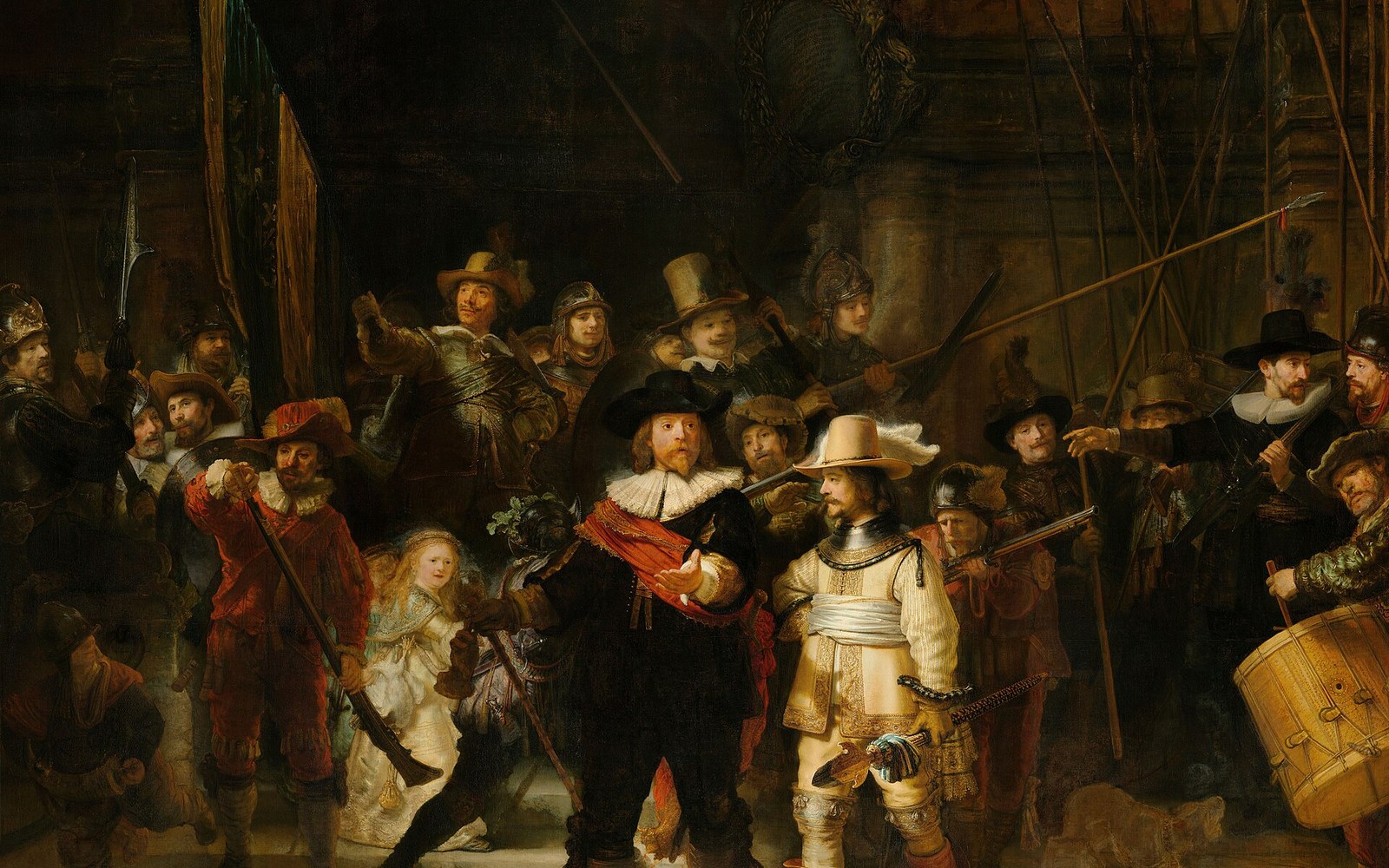
- The Night Watch
Painted in 1642 and cut down in 1715 to fit a wall in the town hall; the missing figures survive only in an earlier copy.
- The Anatomy Lesson of Dr Nicolaes Tulp
A group portrait organised around a demonstration, painted when he was twenty-six.
- Bathsheba at Her Bath
A single figure and a letter, and paint handled with almost nothing held back.
- The Jewish Bride
Late work in which the paint is built up thickly enough that the surface reads as relief before it reads as cloth.
- The self-portraits
Roughly eighty across a working life, in paint, etching and drawing, which is an unusual quantity of evidence about one face.
The other sections
Support & GroundWhat the picture is painted on.Paint & HandlingWhat it is painted with.Plates & StatesThe etchings, and how they changed.Workshop & PupilsThe other hands in the room.The PaperworkThe documents that survive.ExaminationHow a picture is looked into.ScholarshipHow the corpus was argued over.