The papermaker's mark as a dating tool
Every sheet of hand-made paper carried the emblem of the mill that produced it — a design worked in thin wire and sewn to the mesh of the paper mould, which left a translucent image in the sheet where the pulp lay thinner. That image is the watermark, and for students of Rembrandt's prints it is one of the more precise instruments available.
The logic is straightforward. A paper mould had a finite working life; once worn out it was replaced, sometimes with an identical design but never with an identical wire.
If a watermark can be matched to a dated document — a notarial deed, a merchant's ledger, a book with a known publication year held in the Amsterdam City Archives or a comparable repository — it places the batch of paper in time. An impression of one of Rembrandt's etchings printed on that paper cannot predate the batch.

The qualification matters: the watermark gives a terminus post quem, the earliest possible date, not the actual date. Mills sold paper in quantity; a printer might hold stock for years before using it.
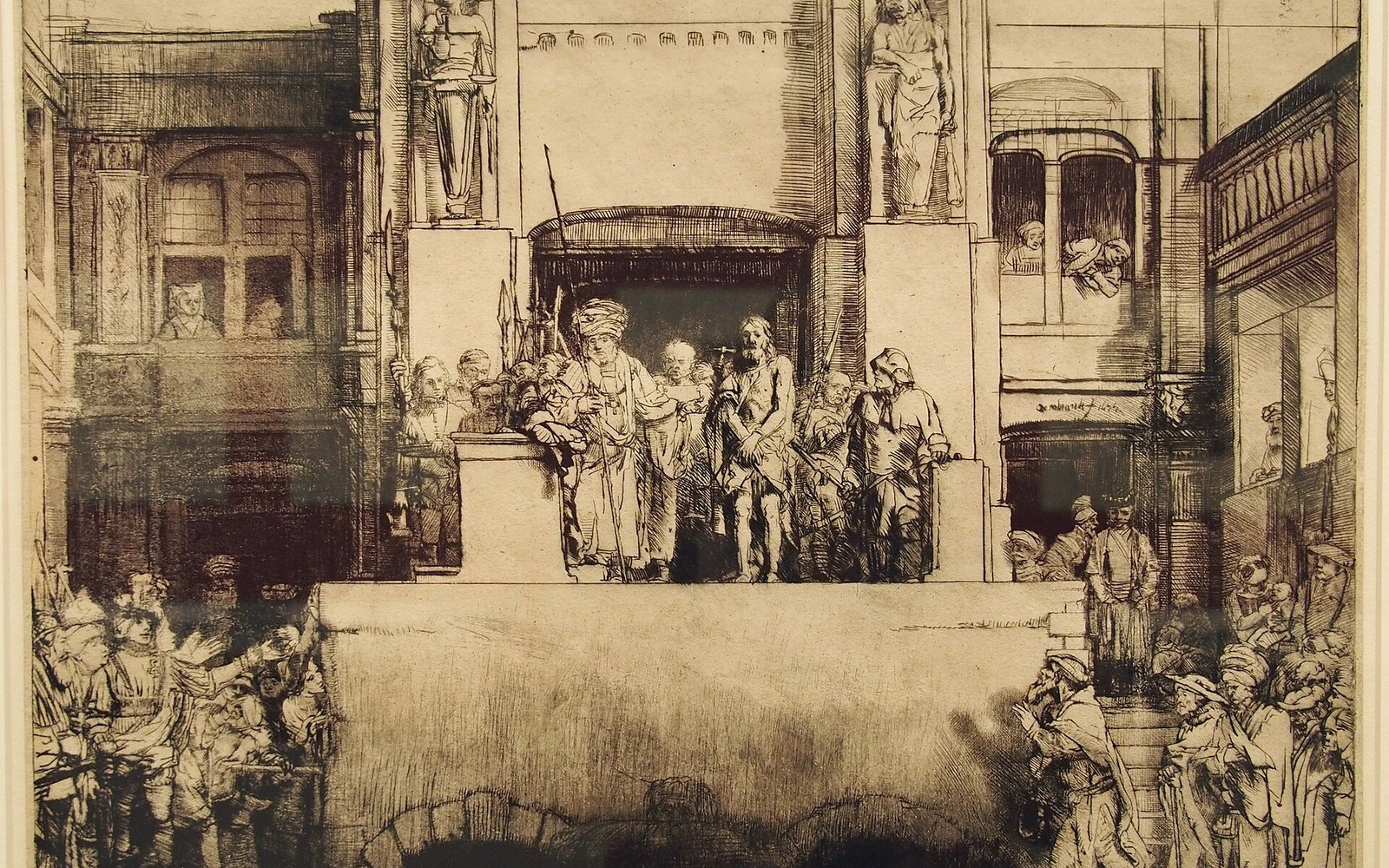
But where a plate went through several states, watermark evidence can help sequence impressions and sometimes confirm that a later state was printed well after Rembrandt's death, distinguishing lifetime impressions from posthumous ones.
The most systematic published work on Rembrandt watermarks is Erik Hinterding's catalogue, issued as part of the broader corpus project, which matched thousands of impressions against a reference set of datable papers.
Hinterding identified not just watermarks but the countermarks — secondary marks, often the mill-owner's initials, found in the other half of the sheet — and used both together to track individual batches across different collections. The Rijksmuseum holds one of the largest and best-documented groups of impressions, making it a key reference point for this kind of comparison.
The qualification matters: the watermark gives a terminus post quem, the earliest possible date, not the actual date.
The technique pairs naturally with the study of drypoint burr: a worn plate with faint burr printed on paper from an early, datable batch is a coherent object; the same worn plate on a paper that postdates the artist by decades is not. Together, plate condition and paper evidence build an argument neither alone could sustain.